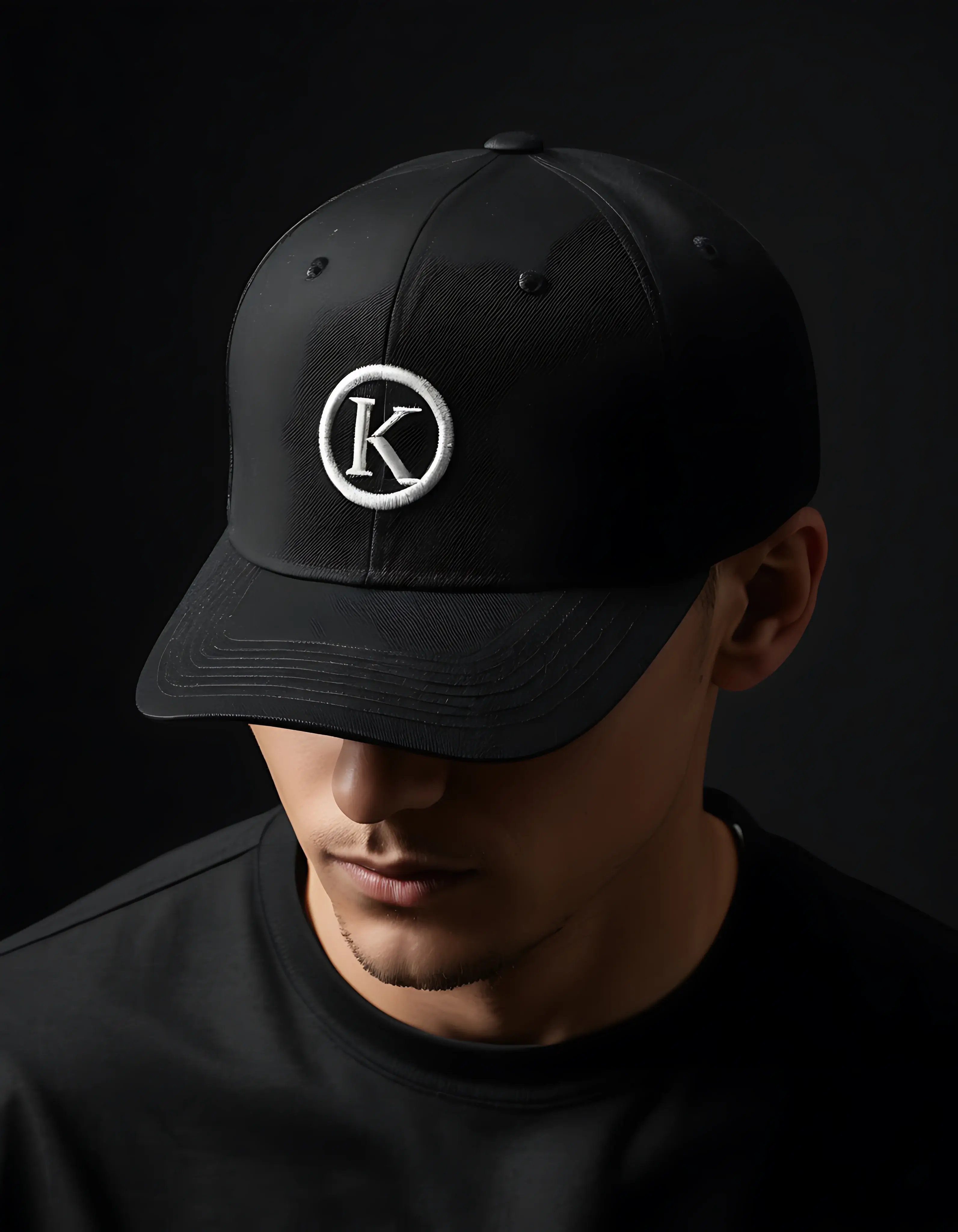
A logo can look sharp on a sample file and feel wrong once stitched onto the wrong crown. Construction matters. Structured vs unstructured baseball caps for custom logos starts with fit, support, and decoration behavior.
For U.S. brands ordering staff gear, retail merch, team caps, or event headwear, the crown decides how the logo sits. That choice also changes comfort, storage, profile, and visual weight.
What Structure Actually Changes in a Baseball Cap
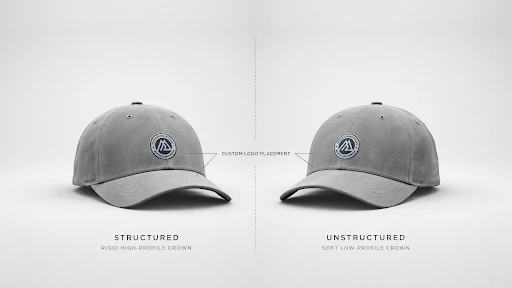
Structured vs unstructured baseball caps for custom logos comes down to support behind the front panels. Structured crowns use firm reinforcement; unstructured crowns stay soft and follow the wearer’s head more closely.
Structured Caps Keep the Front Crown Upright
Structured baseball caps hold their shape when they are sitting on a table, which gives the front logo a consistent display area. The result suits uniforms, team programs, and sharper merchandise.
The firmer front also controls how dense stitching pulls against the cap during production. Custom orders using prominent front embroidery often start with embroidered hat options because crown support and digitizing can be matched together.
Unstructured Caps Sit Lower and Feel Softer
Unstructured baseball caps skip rigid front reinforcement, creating the familiar relaxed silhouette seen on many dad caps. They collapse more easily off the head and conform closely during wear.
That softness works well for lifestyle merch, cafés, breweries, creative teams, and understated branding. The front sits closer to the head, and relaxed dad hat styles suit restrained marks naturally.
| Detail | Structured Crown | Unstructured Crown |
| Off-head shape | Stays upright | Softly collapses |
| Typical visual feel | Crisp, uniform, athletic | Relaxed, broken-in, casual |
| Logo surface | Firm and consistent | Flexible and body-dependent |
| Common logo direction | Detailed embroidery, bold marks, patches | Small embroidery, simple marks, vintage branding |
| Packing | Needs shape protection | Easier to compress |
| Fit impression | More defined crown | Closer to head shape |
How the Crown Changes an Embroidered Logo
With structured vs unstructured baseball caps for custom logos, embroidery quality depends on the artwork file, crown, center seam, fabric, backing, hooping, and stitch sequence. Each variable influences the finished surface.
Dense Logos Usually Benefit From More Support
A reinforced crown gives structured hats for embroidery extra stability during stitching, especially when a design uses filled areas, outlines, or several color changes. That stability can help registration remain cleaner.
Madeira USA’s cap-embroidery instructions explain how backing maintains tension and why cap designs commonly stitch from the center outward and brim upward. These details become important before approving a large run.
Soft Crowns Need More Deliberate Stabilization
Structured vs unstructured baseball caps for custom logos becomes more technical when the chosen blank is soft. Extra backing can temporarily support an unstructured front, helping the fabric stay controlled during embroidery.
That makes dad hats with logos viable for clean flat embroidery when the artwork suits the crown. Small wordmarks, initials, icons, and uncomplicated shapes usually work comfortably with the softer profile.
The Center Seam Can Change a Good Logo
A six-panel cap places a seam through the middle of the usual front embroidery area. Impressions identifies seam position, profile height, hooping, underlay, and stitch direction as practical digitizing considerations.
A narrow letter, tiny counter, or thin outline can lose clarity where stitches cross that ridge. Five-panel fronts remove the center seam from the main logo area, simplifying certain layouts.
Match the Logo Style to the Cap Before Ordering
The best decision in structured vs unstructured baseball caps for custom logos starts with the actual artwork. A two-inch wordmark and a multicolor sports crest place very different demands on the same crown.
- Small text or initials: Favor a stable surface and digitizing that preserves counters and spacing.
- Wide corporate wordmark: Check crown height first so the design does not crowd the upper curve.
- Mascot or filled crest: Use adequate support, sensible stitch density, and a proof made for the selected cap.
- Simple lifestyle icon: A softer crown can produce a natural, low-key presentation.
- Patch logo: Evaluate patch thickness, shape, and edge finish along with the crown profile.
- Raised embroidery: Confirm the cap, foam, stitch width, and digitizing are suitable before production.
Brands deciding between stitching, printing, and patch applications can compare how each hat decoration method affects detail and finish. Texture, artwork complexity, expected wear, and cap construction should guide the final selection.
Fit Matters as Much as Logo Clarity
In structured vs unstructured baseball caps for custom logos, the wearer sees the crown before noticing stitch theory. A firm profile creates more height and definition; a soft profile sits closer.
That distinction matters for custom hats in the USA because one bulk order may serve office staff, field crews, customers, students, or retail buyers. Head shape and personal preference can change acceptance quickly.
Low Profiles Work Well for Subtle Merchandise
Low-profile baseball caps keep the crown closer to the head, which suits restrained logos and casual uniforms. Available embroidery height also becomes tighter, so artwork should be sized for the cap.
Wearers frequently notice crown height when a cap feels oversized, shallow, or awkward around the forehead. Sampling becomes valuable when one branded order needs to work across a mixed group.
Taller Structured Crowns Give Logos More Presence
A mid- or high-profile structured front provides more visual room for baseball caps with logos designed to be noticed from several feet away. Sports marks and retail graphics often benefit from that presence.
For buyers comparing crown, brim, closure, and category differences, popular custom hat styles show how baseball caps, snapbacks, truckers, fitted hats, and other options change the finished profile.
Five-Panel and Six-Panel Construction Deserve a Check
Structured vs unstructured baseball caps for custom logos is only one part of the cap specification. Panel count changes the front surface, seam position, crown shape, and where embroidery can travel cleanly.
A six-panel cap gives the classic baseball shape and places a vertical seam at front center. A five-panel cap creates a broader uninterrupted face, useful for some wide marks and patch layouts.
Cap-specific digitizing matters on either construction. Ricoma’s embroidery support materials explain that designs prepared for flat garments may perform differently on caps because the curved surface changes stitching behavior.
Which Crown Fits Common U.S. Brand Uses?
For structured vs unstructured baseball caps for custom logos, the final choice should reflect where the hat will live after delivery. Uniform consistency, resale appeal, climate, dress code, and audience all matter.
| Use Case | Starting Direction | Why |
| Corporate uniforms | Structured | Consistent crown shape across the team |
| Sports or school programs | Structured | Defined athletic presentation |
| Brewery or café merch | Unstructured | Relaxed everyday character |
| Streetwear drop | Structured or soft low-profile | Depends on silhouette and logo scale |
| Outdoor event staff | Test both | Fabric and ventilation matter alongside structure |
| Premium lifestyle merch | Unstructured | Works well with restrained embroidery and washed finishes |
Businesses ordering custom caps for US businesses should sample the exact blank when possible, especially for large runs. A digital proof confirms placement; a physical sample reveals crown height, hand feel, and fit.
A Practical Pre-Production Checklist
Before approving structured vs unstructured baseball caps for custom logos, decide what the logo needs from the cap and what the wearer needs from the fit. These checks prevent avoidable revisions later.
- Confirm structured, lightly structured, or unstructured crown construction.
- Check low-, mid-, or high-profile height.
- Identify five-panel or six-panel front construction.
- Measure the usable decoration area for the chosen blank.
- Simplify tiny text or narrow details that will not stitch clearly.
- Match backing and digitizing to the selected cap.
- Check front, side, and back placement separately.
- Review fabric weight, finish, and color against thread colors.
- Test one sample before a major retail, team, or event run when the project allows.
The baseball hat options for branding include fitted, adjustable, vintage, casual, and premium directions for different uses. Crown structure should be selected before artwork dimensions are locked.
FAQs About Structured and Unstructured Logo Caps
Are Structured Baseball Caps Better for Embroidery?
For detailed or stitch-heavy artwork, Structured vs Unstructured Baseball Caps for Custom Logos often favors a structured crown because the front stays firmer during decoration. Simpler embroidery can work cleanly on either construction.
Can You Embroider a Logo on an Unstructured Baseball Cap?
Yes. Custom embroidered hats can use soft crowns when backing, hooping, digitizing, and design density suit the fabric. The artwork may need simplification or added stabilization before the production run.
Do Unstructured Caps Make Logos Look Wrinkled?
They can show more movement because the crown follows the wearer’s head and collapses off-head. Proper backing, suitable stitch density, and cap-specific digitizing reduce puckering and distortion.
Are Snapbacks Always Structured?
Many snapbacks use structured fronts, especially styles designed around a tall, defined crown. Construction still varies by blank, so confirm the cap specification instead of relying only on the closure name.
Which Style Is Better for Smaller or Lower-Profile Fits?
A soft or low-profile cap often sits closer to the head and creates less crown volume. A low-profile structured cap can also work when a wearer wants definition without excessive height.
Choose the Crown Before You Approve the Logo
Structured vs unstructured baseball caps for custom logos works best when treated as a product decision from the start. Begin with crown support, profile, panel construction, decoration method, and the people wearing it.
Custom Hats Maker can help U.S. brands turn those choices into production-ready headwear, from embroidered baseball caps to relaxed merchandise styles. Explore custom headwear for brands, teams, and events and request a proof around the cap your logo needs.